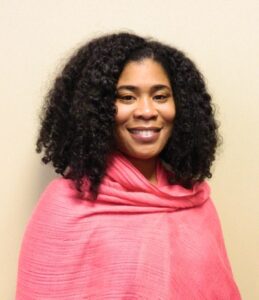
- Head, Department of Psychology
- Tracy Winfree and Ted H. McCourtney Professor in Children, Work, and Families
- Professor of Psychology & Human Development and Family Studies
- Pathways to Competence Initiative Director
Dr. Kristin Buss is interested in temperament and emotional development, with particular focus on fear and emotion regulation, with the goal of identifying risk trajectories to anxiety development. Her work highlights the importance of early-emerging and stable individual difference markers of vulnerability. Her research utilizes a multi-method approach including endocrine and autonomic physiology, EEG, ERP, eye-tracking and observations of emotion challenge laboratory tasks from infancy to adolescence. She has over 30 years of experience with observational methodology, and multi-method assessment of behavior focused largely on fear reactivity and regulation, including expertise in micro-analytic coding and analyses of these behaviors. The current research in Dr. Buss’ lab focuses on uncovering the physiological and contextual mechanisms underlying developmental trajectories of risk for extremely fearful children who are at heightened risk for social anxiety symptoms. This work takes a biopsychosocial approach to examine variation in trajectories for fearful children because the etiology and developmental course is complex and multifaceted. In one line of research, funded by two NIMH grants, Dr. Buss examines the developmental trajectories of toddlers identified as dysregulated in fear through kindergarten and the factors that contribute to risk for anxious symptoms and adjustment problems across childhood and into early adolescence. Over the past decade, she has built strong collaborations with Drs. Koraly Pérez-Edgar and Vanessa LoBue to examine the role of attention biases, emotion regulatory processes, and anxiety development across infancy. Most recently, her work has focused on a recently completed NIMH-funded study of adolescent trajectories of anxiety with a particular focus on neural processes and a new NIMH-funded study of contextual factors such as digital media use in collaboration with Dr. Sarah Myruski.

- Professor of Psychology
- Co-Director, Child Study Center
- Families at Risk Initiative Co-Director
Dr. Eiden’s research focuses on understanding developmental trajectories among children at risk due to multiple adversities associated with parental substance use and problems, as well as early childhood interventions designed to ameliorate these risks and promote competence. Her studies, many of which follow cohorts of children across multiple developmental stages (e.g., prenatal period to adolescence), seek to understand developmental mechanisms that may explain the association between parental risk factors and child outcomes (e.g., infant-parent attachment, parent-child self-regulation, individual differences in children’s autonomic and stress reactivity, and immune/inflammatory mechanisms). She has a particular interest in prenatal and early childhood interventions for substance using parents, with the goal of promoting family health, including positive developmental cascades for children. Current projects include a randomized clinical trial for first time expectant parents to promote co-parenting and reduce hazardous drinking among father/non-pregnant partners; a translational (human-animal) study of prenatal tobacco and cannabis exposure effects on middle childhood outcomes in a sample recruited in pregnancy; developmental pathways to violence, victimization, and substance use in a sample exposed to cocaine and other substances in utero; a collaboration with Dr. Mary Dozier on a randomized clinical trial for low-income mothers with opioid use disorder using a modification of the Attachment and Biobehavioral Catch-Up; and a collaboration with Drs. Jenae Neiderhiser, Danielle Downs, and colleagues in Geisinger on a pilot rural birth cohort study from pregnancy to 3 years of child age.

- Professor of Psychology
- Open Data and Developmental Science (ODDS) Initiative Director
Dr. Gilmore studies the neuroscience of perception, action planning, and memory in infants and children—specifically, the development of visual spatial perception. His work involves neuroimaging (both MRI & EEG) as well as behavioral and computational methods. In his role as Director of the Open Data and Developmental Science (ODDS) initiative at the Child Study Center, Dr. Gilmore has organized workshops on data-sharing and reproducible research practices, including Penn State’s first Open Science Bootcamp. He is the Co-Founder and Co-Director of the Databrary.org data library and Co-PI of the Play & Learning Across a Year (PLAY) Project, and co-author of the databraryr R package.

- Distinguished Professor of Human Development and Family Studies
- Professor of Psychology and Pediatrics
- Families at Risk Initiative Co-Director
Dr. Douglas Teti is a developmental scientist whose research is focused on family processes as they relate to infant and early child development. He has had a long-standing interest in socio-emotional development in early childhood (e.g., quality of attachment to parents), parenting competence and parenting at risk, how parenting is affected by parental mental health and contextual factors, and how parenting affects infant and child functioning. During the past ten years he has received continuous funding from the National Institute of Child Health and Human Development to examine the role of parenting in promoting/impeding child sleep in infancy and early childhood, and how parenting and sleep intersect in predicting child development and family functioning. All of his current projects are interdisciplinary and involve graduate and undergraduate students. His students draw from the project they work on in developing their own areas of expertise. In addition, Dr. Teti serves as a co-leading faculty member (along with Rina Eiden) of the Families at Risk (FAR) research initiative of the Child Study Center. FAR brings together a working group of faculty across Penn State interested in factors that influence family processes (parenting, marital relations and coparenting, sibling relations) and family well-being, and in turn how these processes affect and are affected by children’s development.

- Professor, Developmental Area
- Former McCourtney Family Early Career Professor in Psychology
- Department of Psychology
- Director of PACT (Parents And Children Together)
- Co-Director, Community Engaged Research (CEnR) Workgroup
Dr. Witherspoon’s research focuses on how multiple contexts impact development, primarily among adolescents and families of color. Her work focuses on place, school, and family factors that affect adolescents’ socioemotional and academic adjustment. She also examines how race, ethnicity, and other cultural attributes interact with contextual characteristics to influence adolescent outcomes. Her current work examines adolescent development from middle to high school to understand how aspects of place (e.g., residential neighborhood and other places youth spend their time) and family contexts are related to adolescents’ academic adjustment and beliefs as well as their deviant behaviors, racial identity, and discrimination experiences. She also examines how place is associated with parenting behaviors and strategies. Dr. Witherspoon’s lab, The Context and Development Lab, explores these processes across adolescence and young adulthood. Through her collaborations at Penn State and other universities she examines similar developmental processes among diverse school children (e.g., LEGACY – Emilie Smith (PI)) and expands her research to other developmental periods using varying research designs and approaches (e.g., EGDS/ECHO – Jenae Neiderhiser). A goal of her research is to elucidate the development of urban and rural adolescents and their families, with particular attention to contextual supports.